Sustituir refrescos y bebidas azucaradas por agua
The practice of quenching thirst and staying regularly hydrated using tap water, mineral water, or unsweetened herbal teas instead of commercial juices, sodas, or sugary soft drinks.
Step 1 of 2
The hosted destination on your domain: the ranking page ready to share, with your own votes.
A QR code that takes your audience to the ranking destination: made for TV, signage and screens.
The ranking embedded in an article on your site or app: your readers vote without leaving the page.
The hosted destination on your domain: the ranking page ready to share, with your own votes.
Allow voting
Your audience can vote for the participants in this ranking. It is independent of showing the vote count.
Show vote count
Each participant shows how many votes they have received, even if voting is turned off.
Show position
Each participant shows their position in the ranking. It does not change the list order.
Vote on the most accessible and realistic balanced eating habits to maintain in daily meals.
The practice of quenching thirst and staying regularly hydrated using tap water, mineral water, or unsweetened herbal teas instead of commercial juices, sodas, or sugary soft drinks.
The habit of reserving a substantial portion of main meals for raw or cooked vegetables, increasing the volume of fiber and micronutrients without excessively raising caloric density.
Choosing whole seasonal fruit with its natural pulp and fiber after meals or between meals, rather than processed sweets, pastries, or sweetened dairy products.
Generated with AI
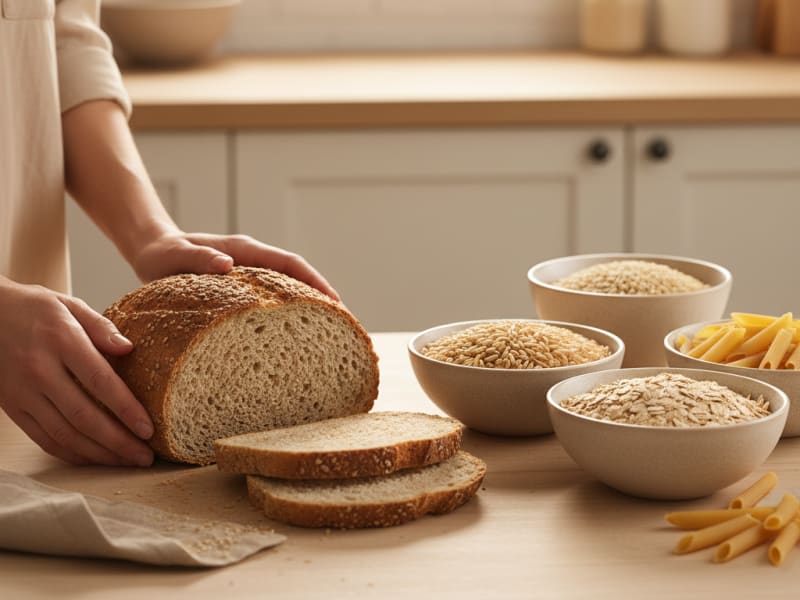
Selecting breads, pastas, rice, and flours made from whole grains, which preserves the bran and germ, providing a gradual release of energy and greater satiety.
Preferential use of mechanically extracted olive oil, both raw in dressings and for sautéing and cooking at moderate temperatures, providing monounsaturated fatty acids and polyphenols.
Generated with AI
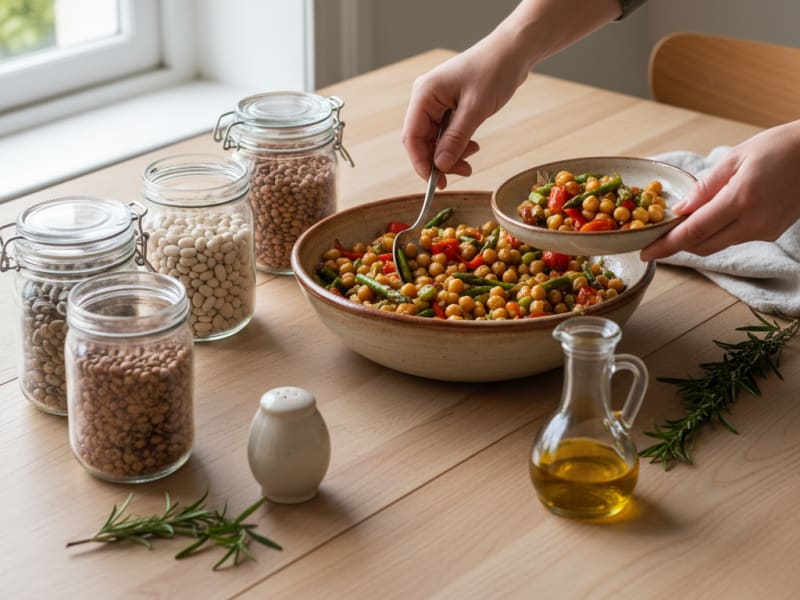
Regular incorporation of chickpeas, lentils, beans, or peas into stews, cold salads, or pureed soups, providing an accessible source of prebiotic fiber and plant-based protein.

Generated with AI
The practice of turning off phones, computers, or televisions during meals to focus sensory attention on the plate and make it easier for the brain to register biological satiety signals.
Generated with AI
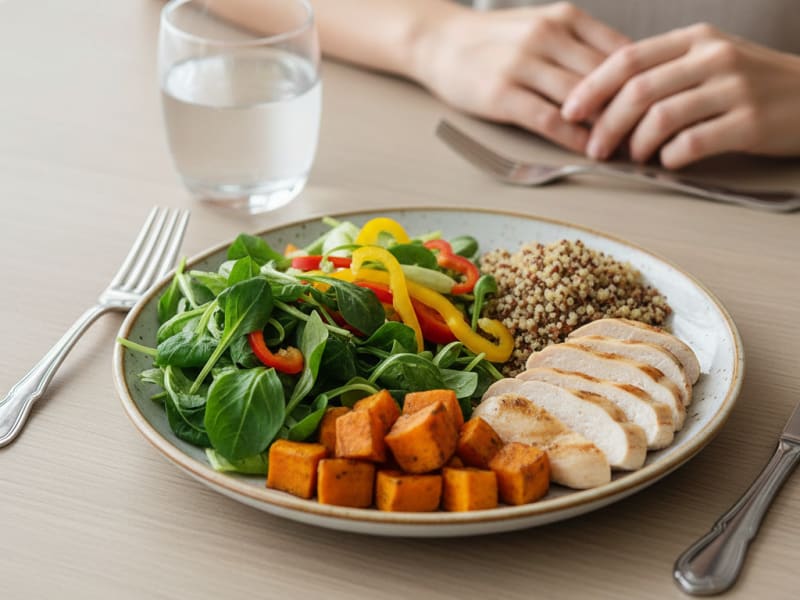
A visual portion-distribution technique that structures intake by dividing the plate's surface among vegetables, protein sources, and complex carbohydrates on smaller-diameter dishware.

Generated with AI
Planning weekday meals in advance to stock up solely on fresh ingredients and avoid resorting to ultra-processed foods or fast food due to a lack of time.
Generated with AI
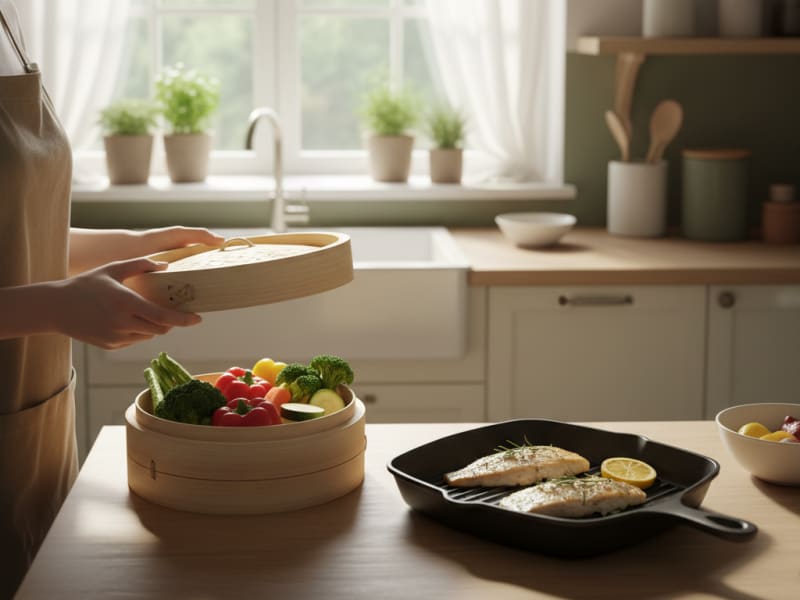
Preparing food using direct heat or controlled convection without the need for excessive added fat, preserving nutrients and texture without resorting to fried foods or commercial breading.
Keeping a fruit bowl within easy reach on the counter or containers of washed, cut vegetables on the front shelves of the refrigerator to encourage spontaneous healthy choices.
The habit of checking food labels at the supermarket to spot added sugars under various names, refined flours, or excess sodium in commercial sauces, broths, and canned goods.